
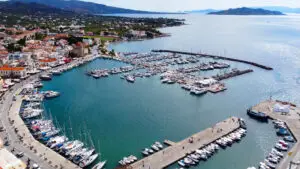
Unwind in the Saronic Islands
Sailing through the Saronic Islands is like flipping through a
The Dodecanese islands are one of Greece’s most rewarding sailing regions: dramatic islands, reliable winds, deep history, and authentic island life. For skippers, the Dodecanese offer long passages, clear navigation, varied shelter options, and real seamanship challenges, balanced by superb anchorages, welcoming ports, and unforgettable culture.
The Dodecanese are a group of islands in the southeastern Aegean Sea, forming Greece’s easternmost archipelago. Traditionally counted as “twelve islands” (from dodeka nisia), the group actually includes dozens of inhabited and uninhabited islands. Their character is shaped by centuries of maritime trade, fortification, and cultural exchange. For sailors, the Dodecanese stand out for their spacing between islands, deeper waters compared to the Cyclades, and a strong sense of independence. Town quays remain central to daily life, while marinas are fewer and more functional than luxury-focused.
Geographically, the Dodecanese sit east of the Cyclades and north of Crete, stretching along the Turkish coastline. In many places, Turkey is visible from deck, making the region feel like a crossroads between Europe and the Near East.
From a navigation perspective, this location brings:
Longer legs than the Saronic or Ionian
Open-sea exposure in Meltemi conditions
International boundaries that require situational awareness
The islands’ positioning makes them ideal for experienced coastal sailors and confident charter skippers seeking a more adventurous Greek itinerary.
The Dodecanese have a layered maritime history. Ancient Greeks, Romans, Byzantines, Knights of St John, Ottomans, and Italians all left their mark. This history is visible in fortified harbours, medieval towns, castles overlooking anchorages, and neoclassical port buildings.
From a skipper’s viewpoint, many historic harbours were designed for sailing vessels, not modern yachts. Expect:
Sailing here is as much about history as it is about seamanship.
The Dodecanese are best experienced from the water. Sailing allows you to:
For skippers, this is a region where planning matters—and where good decisions are rewarded with unforgettable nights at anchor.
Large islands such as Rhodes and Kos act as transport hubs, provisioning centres, and charter bases. They offer airports, fuel docks, repair facilities, and reliable services.
Islands like Symi, Patmos, Leros, and Kalymnos deliver the classic Dodecanese experience: compact harbours, strong local identity, and excellent tavernas within a few metres of the quay.
Many uninhabited islets offer excellent daytime anchorages or overnight stops in settled weather. Skippers should always evaluate swell exposure and holding, especially during the Meltemi.
A major cultural highlight with a vast medieval old town, multiple harbours, and strong provisioning options. Best treated as a start or end point rather than a quiet retreat.
Flat, accessible, and well connected, Kos is popular with charter fleets. A good island for crew changes and easy logistics.
Famous for sponge diving and climbing, Kalymnos offers a working-island feel, excellent town quays, and straightforward approaches.
Spiritual, serene, and atmospheric. Its main harbour provides good shelter and an unforgettable backdrop dominated by the monastery above.
One of the most beautiful harbours in Greece. Deep water, limited space, and katabatic gusts demand confident boat handling.
Highly underrated by casual tourists but loved by sailors. Excellent shelter options, friendly ports, and fascinating WWII history.
Often described as a bridge between the Cyclades archipelago and Dodecanese, Astypalaia rewards longer passages with dramatic scenery and a relaxed pace.
The Meltemi dominates summer, typically blowing from the north to northwest. Unlike the Cyclades, winds can funnel and accelerate between islands.
Expect stronger gusts near headlands and island gaps. Early starts and conservative routing are wise in July and August.
Seas build quickly in open areas. Currents are generally weak but can be noticeable in narrow channels.
Visibility is excellent. Navigation is mostly straightforward, with deep water and clear approaches—but ferries move fast and demand vigilance.
Ideal for relaxed sailing, hiking, and cultural exploration. Winds are lighter, and harbours are quiet.
Peak Meltemi season. Best suited to confident skippers who enjoy brisk sailing and disciplined planning.
A favourite among experienced sailors: warm water, settled weather, and fewer crowds.
Primarily for liveaboards and locals. Services are limited, but the atmosphere is authentic and calm.
International flights serve Rhodes and Kos. Smaller islands connect via domestic flights.
Efficient but time-consuming. Useful for crew changes or one-way itineraries.
Longer passages from the Cyclades or Crete require careful weather windows.
Close proximity allows for international itineraries, subject to clearance procedures.
Bareboat suits experienced skippers; crewed charters allow deeper exploration with less responsibility.
Rhodes and Kos dominate, with limited options elsewhere.
Possible but dependent on fleet logistics and weather patterns.
Generally good value compared to more crowded regions, especially outside peak season.
Functional rather than luxury-focused, offering fuel, water, and basic services.
The heart of Dodecanese sailing. Expect stern-to mooring, lazy lines in some ports, and local assistance.
Often deep with good holding. Attention to swell direction is critical.
Shelter planning is essential; most islands offer at least one safe option in northerlies.
Kos – Kalymnos – Leros – Lipsi – Patmos – Kalymnos – Kos
Rhodes – Symi – Tilos – Nisyros – Kos – Kalymnos – Leros – Patmos
Kos – Kalymnos – Pserimos – Leros – Lipsi
Short hops with multiple shelter options, favouring larger islands and enclosed bays.
Headlands and channels amplify wind—reef early.
Fast ferries operate on fixed schedules and limited manoeuvrability.
Well-lit harbours, but limited marina infrastructure—arrivals require planning.
Always identify a downwind alternative before departure.
Large islands provide excellent provisioning. Smaller islands may have limited supplies and fuel only by arrangement. Plan conservatively.
Expect strong island identity, excellent seafood, family-run tavernas, and genuine hospitality. Respect local rhythms and harbour etiquette.
Use holding tanks near harbours, anchor responsibly, avoid seagrass, and support local businesses. The Dodecanese remain unspoilt—help keep them that way.
The Dodecanese are better suited to intermediate and experienced skippers. While navigation is generally clear and depths are generous, summer Meltemi winds, longer passages, gust acceleration zones, and frequent stern-to mooring demand confident boat handling and good passage planning.
In July and August, the Meltemi commonly blows at 20–30 knots, with stronger gusts near headlands and between islands. Compared to the Cyclades, winds can feel more concentrated and less forgiving due to fewer sheltered short-hop options.
Kos and Rhodes are the main charter bases. Kos is popular for one-week itineraries and easier logistics, while Rhodes is better for longer routes and one-way charters due to its size, facilities, and flight connections.
You can largely rely on town quays and anchorages. Purpose-built marinas are limited, but most islands have well-used municipal quays. Anchorages are plentiful, though often deep, and swell protection must always be checked carefully.
You do not need special permits to sail near the Turkish coast, but you must not enter Turkish territorial waters without clearing in. Always maintain situational awareness, especially in narrow channels where the boundary may be close.
Night sailing is generally safe in settled conditions, with good visibility and minimal offshore hazards. However, fast ferries operate at speed, some harbours are poorly lit, and Meltemi conditions can make night arrivals stressful. Most skippers prefer daylight arrivals.
Yes, particularly around Kos, Kalymnos, Leros, and Lipsi. These areas offer shorter legs, protected waters, friendly quays, and engaging shore activities. Summer wind strength should be factored carefully when sailing with children.
Yes, but with caveats. Spring and autumn are excellent. Winter sailing is possible for experienced sailors and liveaboards but comes with reduced services, stronger weather systems, and fewer safe-weather windows.
August is busy, especially on Kos, Rhodes, and popular harbours like Symi and Patmos. However, compared to the Cyclades, the Dodecanese still feel less overwhelmed, and quieter islands are always within reach if you plan well.
The Dodecanese offer deeper water, longer passages, stronger cultural identity, fewer whitewashed tourist towns, and a more “working harbour” feel. For many skippers, they feel more authentic, less commercial, and more rewarding from a seamanship perspective.
Sailing through the Saronic Islands is like flipping through a
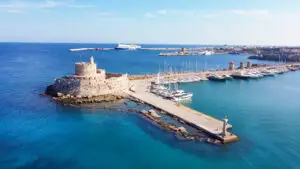
Ahoy, adventurous sailors! Welcome to the Dodecanese Islands, where Poseidon
Aegina Island Travel Guide: The Perfect Greek Island Getaway Located
Contact Us Now to Create Your Dream Sailing Itinerary [email protected]