Unwind in the Saronic Islands
Sailing through the Saronic Islands is like flipping through a
The Ionian Sea is often marketed as the gentle heart of Greek islands sailing, a place of short hops, predictable summer breezes, and sheltered anchorages. For many, that reputation ends the conversation.
For skippers and travellers looking deeper, however, the Ionian reveals something else entirely: a compact but serious expedition sailing environment, capable of delivering offshore legs, demanding weather decisions, and authentic seamanship, all within reach of reliable safe havens.
This is not flotilla sailing.
This is the Ionian, approached with expedition discipline.
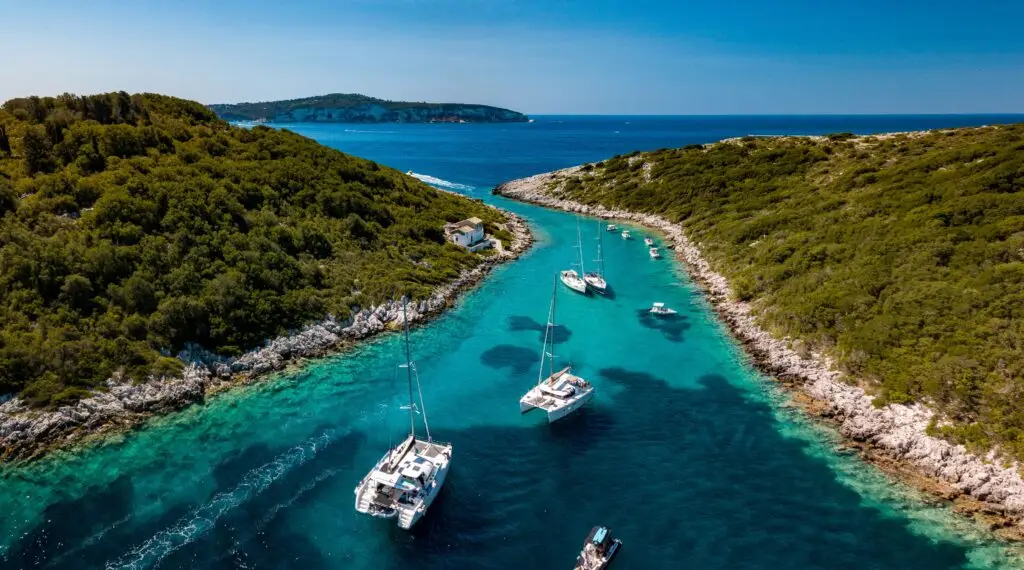
For skippers considering an expedition yacht charter in Greece, the Ionian offers a rare balance:
Deep water close to shore
Minimal tidal complexity
Dense clusters of protected ports
Reliable fuel, provisioning, and repair facilities
Unlike more exposed Mediterranean regions, the Ionian allows crews to push their limits without abandoning safety margins. This makes it ideal for:
Offshore preparation voyages
Advanced charter itineraries
Pre-Atlantic or Mediterranean training sails
Skipper-led adventure holidays with experienced guests
In short, it is one of the best locations for offshore sailing training in the Mediterranean, disguised as a holiday.
This voyage forms a deliberate loop through the heart of the Ionian, balancing challenge and retreat options.
Duration: 3–4 weeks
Best months: May–June and September–October
Ideal yachts: Well-found monohulls and catamarans, 10–18 m
The route intentionally includes one long offshore passage, transforming an Ionian sailing holiday into a genuine expedition experience.
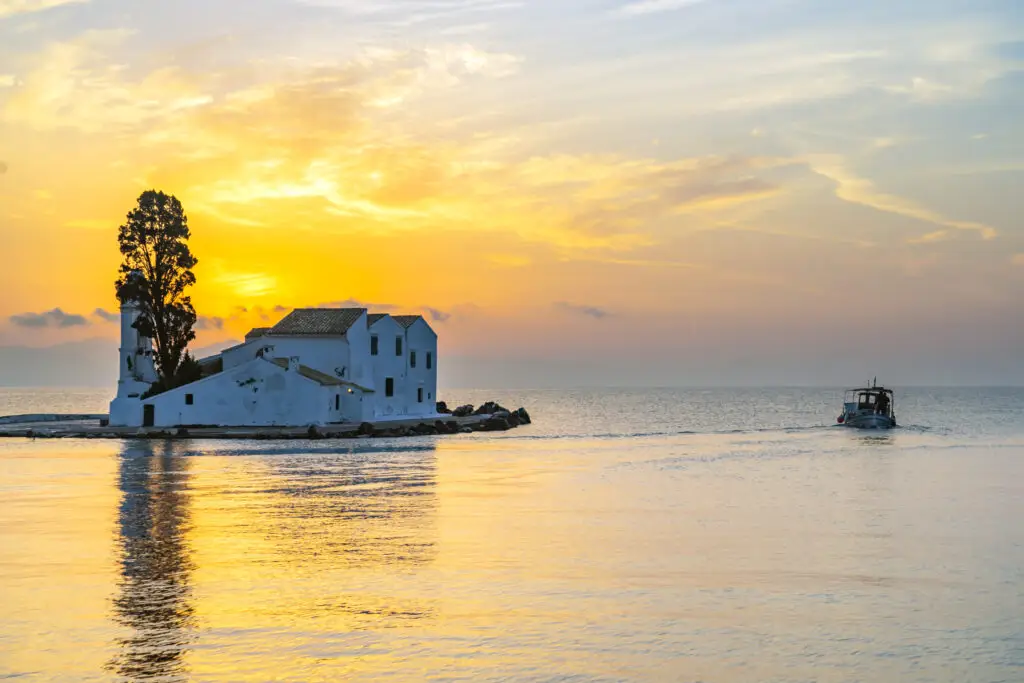
At approximately 85 nautical miles, the leg from Zakynthos north to Paxos is the voyage’s proving ground.
For skippers, it demands:
This passage alone elevates the itinerary from leisure cruising to expedition-grade sailing.
Professional rule:
If sustained winds exceed 25 knots, or thunderstorms are forecast, the correct decision is not to depart.
That discipline — not distance — defines an expedition.
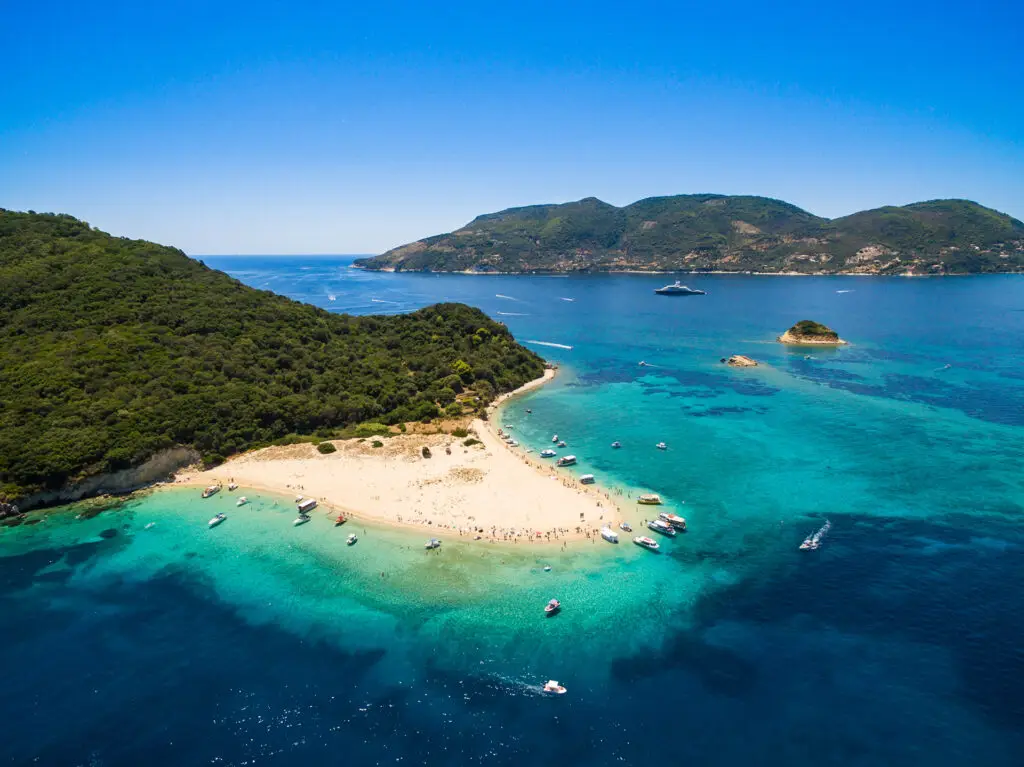
What makes the Ionian exceptional for expedition sailing is not how far you can go, but how safely you can retreat.
Vathy Ithaca
A near-perfect natural harbour with excellent protection and provisioning.
Argostoli
One of western Greece’s best all-weather ports, with medical facilities and repair yards.
Kyllini
A critical bail-out harbour during unsettled weather.
Katakolo
Deep-water commercial protection, invaluable in heavy conditions.
Gaios
Canal-like shelter and reliable holding, ideal for weather delays.
Gouvia Marina
The ultimate expedition reset point, with flights, spares, and technical support.
Ionian conditions are often underestimated.
Successful Ionian expeditions favour early departures, early reefing, and conservative harbour choices, habits that translate directly to offshore competence elsewhere in the Mediterranean.
This voyage is frequently used as:
Few Mediterranean sailing holidays offer this level of real-world seamanship development without extended exposure.
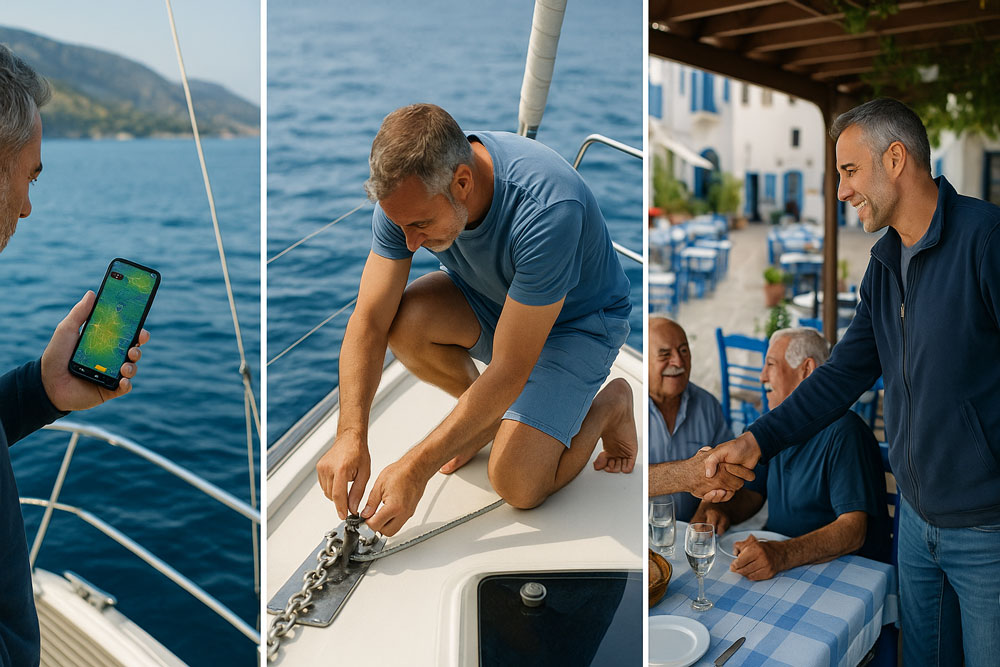
Modern expedition sailing also means low impact:
Responsible practice enhances both the voyage and the region.
When offshore conditions are unsuitable, the expedition shifts rather than stops:
Lefkas → Meganisi → Ithaca → Kefalonia → Lefkas
The mindset remains expeditionary; the exposure reduces.
For skippers and adventurous travellers, the Ionian is not merely a gentle introduction to sailing Greece. Approached with intention, it becomes one of the Mediterranean’s most effective expedition training grounds.
Not because it is extreme, but because it rewards judgement.
And in sailing, judgement is everything.
Is the Ionian Sea suitable for expedition-style sailing?
Yes. With deep water, reliable infrastructure, and frequent safe havens, the Ionian can support expedition-grade routing when you include at least one longer offshore leg and apply conservative weather gates.
What’s the best time of year for an Ionian expedition voyage?
May–June and September–October typically offer comfortable temperatures, fewer crowds, and more manageable weather patterns than peak summer.
How long does an expedition-style Ionian route take?
Most crews plan 3–4 weeks to allow for weather delays, training days, and safe-haven pauses without rushing.
What’s the most challenging passage in the route?
The Zakynthos to Paxos leg (~85 NM) is the defining offshore passage, often requiring an early start, potential night sailing, and disciplined watch-keeping.
When should you postpone the Zakynthos–Paxos offshore leg?
Postpone if sustained winds are above ~25 knots, thunderstorms are forecast, or significant westerly swell is expected on exposed coasts.
What are the best safe havens in the Ionian for heavy weather?
Popular refuges include Vathy (Ithaca), Argostoli (Kefalonia), Gaios (Paxos), and Gouvia Marina (Corfu), plus mainland escape ports such as Kyllini and Katakolo.
Is this route appropriate for charter crews and adventurous travellers?
Yes—if led by an experienced skipper or supported by an offshore-capable operator. It’s ideal for travellers who want a real sailing experience beyond short day hops.
Do you need night sailing experience for this itinerary?
Not strictly, but it helps. The longest leg may involve sailing in darkness depending on speed and departure time. Crews can also break the route into shorter legs if conditions allow.
What skills should skippers practise on an Ionian expedition?
Watch systems, early reefing routines, night navigation and harbour entries, fuel-range planning, and fishing-gear avoidance are all high-value skills for this region.
How can you make an Ionian sailing holiday more sustainable?
Anchor on sand where possible to protect seagrass, minimise discharge near enclosed bays, provision locally, and reduce single-use packaging onboard.
Sailing through the Saronic Islands is like flipping through a
Ahoy, adventurous sailors! Welcome to the Dodecanese Islands, where Poseidon
Aegina Island Travel Guide: The Perfect Greek Island Getaway Located
Contact Us Now to Create Your Dream Sailing Itinerary [email protected]