
Unwind in the Saronic Islands
Sailing through the Saronic Islands is like flipping through a
Kefalonia is the largest of the Ionian Islands and one of Greece’s most rewarding destinations for sailors, charter clients, and independent travelers alike. Known for dramatic cliffs, turquoise bays, authentic villages, and sailor-friendly conditions, Kefalonia blends wild nature with refined Ionian charm.
Whether you are planning a bareboat or skippered yacht charter, or sailing your own private vessel, this guide explains why Kefalonia Greece deserves a central place on your Ionian itinerary.
Kefalonia lies in western Greece, surrounded by the calm, deep-blue waters of the Ionian Sea. Unlike more commercialized islands, Kefalonia feels spacious and unspoiled, with towering mountains, hidden coves, and forests stretching down to the sea.
For sailors, the island offers:
Well-protected anchorages
Manageable summer winds
Short sailing distances to nearby islands like Ithaca and Lefkada
This balance of accessibility and authenticity makes Kefalonia Greece especially appealing to both first-time charter guests and experienced skippers.
Kefalonia stands out even within Greece for its raw natural drama. The island is home to Mount Ainos, one of the few national parks on a Greek island, and features rare black fir forests, underground lakes, and steep limestone cliffs plunging straight into the sea.
What truly sets Kefalonia apart:
Wild, cinematic landscapes
Less mass tourism than other Greek islands
Exceptional water clarity for swimming and snorkeling
Welcoming ports designed around real maritime life
For sailors, the feeling is less “theme park” and more real Ionian cruising.
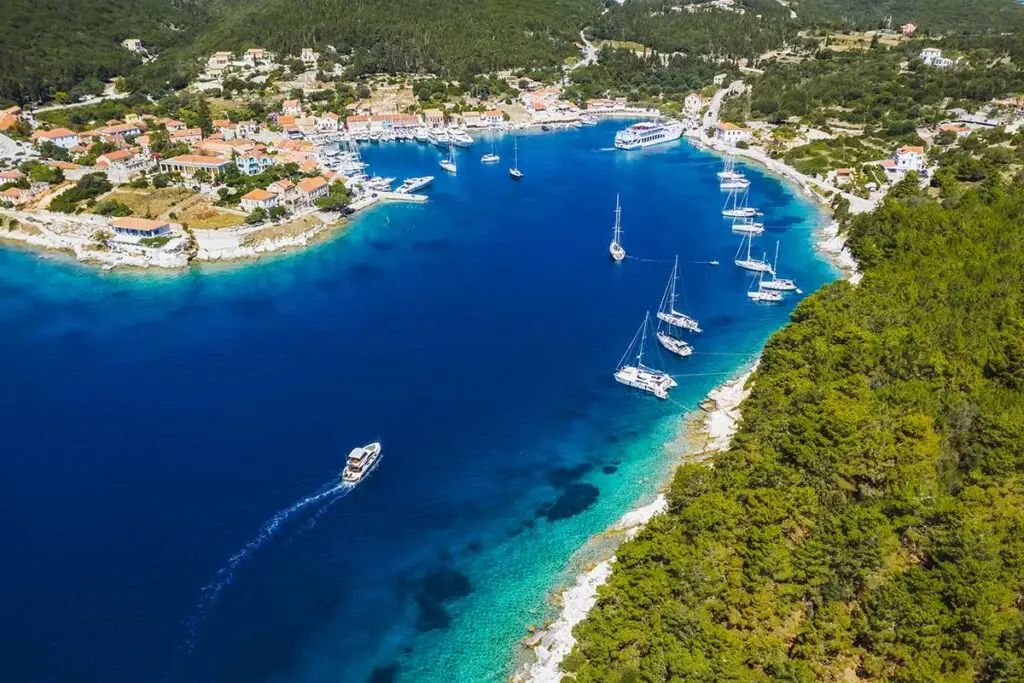
Absolutely! Especially if you value nature, sailing freedom, and cultural depth over nightlife crowds.
Kefalonia Greece is worth visiting if you want:
Relaxed sailing days with short hops
Anchorages that still feel undiscovered
Villages that retain local character
Excellent tavernas without inflated prices
For charter clients, Kefalonia offers a stress-free experience. For private skippers, it provides variety, safety, and enough challenge to stay interesting.
Kefalonia’s history has been shaped by earthquakes, Venetian rule, and maritime trade. Much of the island was rebuilt after the devastating 1953 earthquake, resulting in clean layouts and strong infrastructure.
Key highlights include:
Venetian-era ports and ruins.
Monasteries perched above the sea.
Geological phenomena such as sea water disappearing underground near Argostoli.
From the cockpit of a yacht, these layers of history feel especially tangible as you sail between ancient harbors and modern marinas.
Kefalonia’s natural attractions are among the most impressive in Greece.
Top natural wonders include:
Myrtos Beach – One of Greece’s most iconic beaches, dramatic and unforgettable
Melissani Cave – A sunlit underground lake accessible by boat.
Drogarati Cave – Known for its vast chambers and acoustics.
Mount Ainos National Park – Home to wild horses and rare flora.
Many of these sites are easily combined with sailing days and short inland excursions.
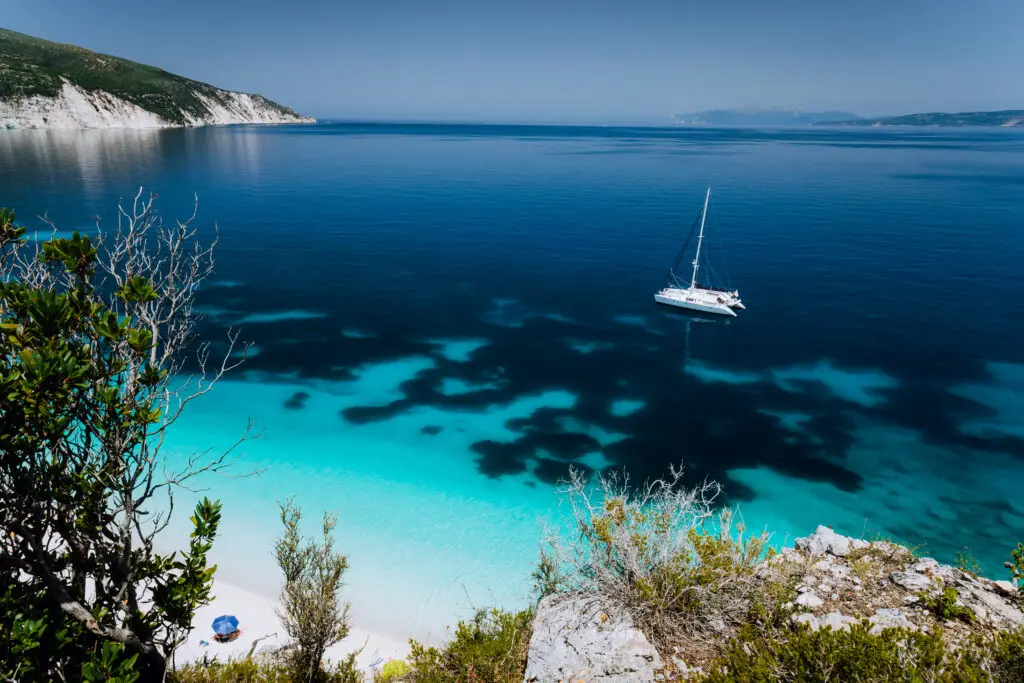
Beauty in Kefalonia depends on perspective:
From the sea: The northern coastline near Fiskardo offers emerald waters and pine-lined bays
From land: Myrtos Beach and the mountain roads above Assos provide breathtaking views
From anchor: Calm bays on the east coast glow turquoise at sunset
For sailors, the most beautiful moments often come at anchor, when the island quiets down and the sea turns glassy.
Myrtos
Antisamos
Petani
Small coves along the east coast
Remote bays reachable only by boat
Antisamos for clarity
Petani for depth and color
For charter guests, beach-hopping by yacht is one of Kefalonia’s biggest advantages.
Fiskardo is elegant, lively, and perfectly designed for yachts.
A postcard village with a calm bay and Venetian fortress.
The island’s capital and main provisioning hub.
Relaxed, authentic, and less visited.
Each port offers a different rhythm, making Kefalonia ideal for slow cruising.
Beyond the ports, inland villages reveal traditional Kefalonian life, with stone houses, family-run tavernas, and local wine. These stops are perfect rest days between sailing legs.
Kefalonia blends outdoor adventure with understated Ionian culture:
For charter clients, culture comes effortlessly. For skippers, it’s a reminder that Ionian sailing is as much about people as places.
Protected waters and line-friendly bays suit all experience levels.
Mount Ainos trails offer panoramic views after a morning sail.
Kayaking, paddleboarding, and snorkeling thrive in calm bays.
Kefalonia is well-equipped for tourism while remaining relaxed. Medical services, provisioning stores, fuel docks, and repair facilities are readily available—important for both charter operations and private yachts.
Direct seasonal flights connect Kefalonia to many European cities.
Ferries run from mainland ports, ideal for travelers combining land and sea routes.
Travel time typically ranges from 6–8 hours, depending on the route and connections. Many sailors prefer flying in and starting their charter directly from the island.
Argostoli: Best for provisioning and charter bases
Fiskardo: Ideal for northern Ionian routes
Charter clients often start in Argostoli, while private skippers may choose based on routing preferences.
May–June: Green landscapes, fewer crowds
July–August: Warm water, lively ports, steady winds
September: Ideal balance for sailing and swimming
The Ionian climate makes Kefalonia forgiving even in peak season.
For sailors, a car is optional. Most highlights are accessible by boat, though a short rental can help explore mountain villages on rest days.
Compared to other Greek islands, Kefalonia is moderately priced. Mooring, dining, and provisions remain reasonable—especially outside August.
Yes. Kefalonia is considered very safe, with a strong maritime culture and friendly local communities—ideal for solo sailors and travelers alike.
Robola wine tops the list, followed by artisanal sweets, olive oil, and herbal products unique to Kefalonia’s mountain terrain.
Read more about: Must see palces in Kefalonia
For charter clients, Kefalonia Greece delivers comfort, beauty, and simplicity.
For private skippers, it offers flexibility, safe navigation, and genuine Ionian sailing.
In both cases, Kefalonia is not just a stop, it’s a destination you’ll want to return to.
Read our: 7 Pro tips for Kefalonia travelers
Yes. Kefalonia is one of the best Ionian islands for sailing, offering calm seas, predictable summer winds, safe anchorages, and short distances between ports and neighboring islands.
A minimum of 4–5 days is enough for highlights, but 7–10 days is ideal—especially if you are sailing and want to explore beaches, villages, and nearby islands at a relaxed pace.
Absolutely. The island’s sheltered waters, clear navigation, and well-equipped ports make it very suitable for first-time charter clients, especially with a skippered or flotilla charter.
For yachts, the east and north coasts are best. Argostoli is ideal for provisioning, while Fiskardo and Assos are favorites for overnight mooring and anchorages.
Most famous beaches like Myrtos and Petani are pebbly, which contributes to the island’s exceptionally clear turquoise water. Some areas, such as Xi Beach, are sandy.
Compared to other Greek islands, Kefalonia is less crowded. July and August are busier, but it still feels relaxed—especially if you explore by boat rather than by car.
Yes. Kefalonia is perfectly positioned for sailing routes to Ithaca, Lefkada, Meganisi, and Zakynthos, making it ideal for one- or two-week itineraries.
Kefalonian cuisine is rich and traditional, featuring meat pies, fresh seafood, local cheeses, olive oil, and the famous Robola white wine.
Kefalonia is moderately priced. Dining, mooring fees, and provisions are generally more affordable than in highly commercialized islands like Mykonos or Santorini.
Yes. Kefalonia is considered very safe, with a welcoming local population, low crime rates, and a strong maritime culture that supports solo sailors and travelers.
Sailing through the Saronic Islands is like flipping through a
Ahoy, adventurous sailors! Welcome to the Dodecanese Islands, where Poseidon
Aegina Island Travel Guide: The Perfect Greek Island Getaway Located
Contact Us Now to Create Your Dream Sailing Itinerary [email protected]