

Largest of the Dodecanese Islands: A Sailor’s Deep Dive into Rhodes
When sailors talk about the Dodecanese islands, the conversation often turns practical very fast: distances, meltemi patterns, harbors, supplies, and shelter. And almost inevitably, one island comes up as the natural anchor point of the region, Rhodes, the largest of the Dodecanese islands.
Rhodes isn’t just big on the map. It’s big in every sense that matters to skippers: coastline length, infrastructure, weather diversity, and cultural layers that unfold the longer you stay. Whether you’re planning a short hop from Turkey, a longer Dodecanese circuit, or a seasonal base, understanding why Rhodes dominates the archipelago helps you sail smarter, not harder.
Let’s break it down from a sailor’s point of view.
Where the Dodecanese Sit — and Why Size Matters
The Dodecanese lie in the southeastern Aegean, scattered between the Greek mainland and the Turkish coast. On paper, they’re just dots. At sea, they behave like stepping stones, each with its own wind shadows, acceleration zones, and weather moods.
In this setting, size changes everything.
A larger island means:
- More coastline options when the wind turns
- Greater variation in anchorages
- Better chances of fuel, water, repairs, and provisioning
- Roads, towns, and services that actually function year-round
That’s where Rhodes pulls ahead.
Rhodes: The Giant of the Dodecanese
At roughly 1,400 square kilometers, Rhodes is not only the largest island in the Dodecanese, it’s one of the largest Greek islands overall. For sailors, that translates into a coastline that feels almost continental.
Think of Rhodes like a floating country rather than a single destination. You don’t “see Rhodes” in a day or two. You choose a side of it.
Coastline Variety You Can Sail Around
Rhodes offers radically different sailing experiences depending on which side you’re on:
- East coast: Calmer seas, sandy anchorages, long beaches, and family-friendly stops
- West coast: Stronger winds, open exposure, dramatic cliffs, and faster passages
- South: Wind playgrounds, wide bays, and long rolling swells
This variety is gold when weather windows shift. When meltemi builds, Rhodes gives you alternatives.
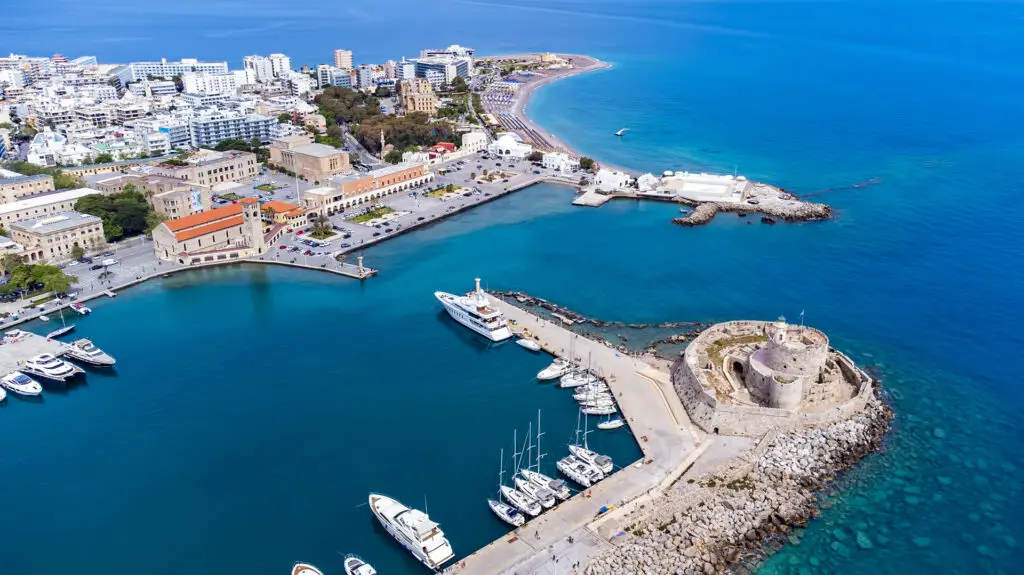
Harbors, Marinas, and Shelter Options
From a skipper’s perspective, Rhodes is one of the most forgiving islands in the eastern Aegean.
Main Sailing Hubs
- Mandraki Harbor: Central, historic, and practical for short stays
- Rhodes Marina: Modern facilities, fuel, water, repairs, and long-term berthing
- Kamiros Skala: Quiet west-side harbor, useful in specific wind conditions
Add to that dozens of bays suitable for anchoring, and Rhodes becomes a natural reset point on any Dodecanese route.
When conditions deteriorate elsewhere, Rhodes is often where boats wait it out.
Provisioning and Logistics: A Skipper’s Reality Check
Smaller islands are charming, until you need a spare part, a technician, or a proper supermarket.
Rhodes solves that.
Here you’ll find:
- Marine suppliers and chandlers
- Large supermarkets near the coast
- Fuel stations with reliable hours
- Mechanics and technicians familiar with yachts
For longer trips, this matters more than postcard beauty. Rhodes lets you fix problems instead of working around them.
Comparing Rhodes to Other Large Dodecanese Islands
Rhodes is the largest, but not the only major island. Understanding the differences helps with route planning.
Kos
Kos is flatter, compact, and very accessible. It’s excellent for short stays and easy sailing but lacks the coastline diversity of Rhodes.
Karpathos
Karpathos is wild, windy, and dramatic. Incredible for experienced crews, but far more demanding and limited in shelter.
Kalymnos
Kalymnos sits somewhere in between — lively, authentic, but smaller and more exposed.
Rhodes stands apart by combining scale, shelter, and services in one island.
Weather Patterns Around Rhodes
Size also influences weather behavior.
- The north catches more wind and chop
- The east offers lee shores during meltemi
- The south becomes a wind accelerator, ideal for long downwind legs
This internal weather diversity means you can often sail around bad conditions instead of through them.
For route planning, Rhodes acts like a buffer zone — absorbing weather changes more gently than smaller islands.
Historical Depth Without Tourist Overload
Rhodes is busy — but it’s also layered.
Once you move beyond the obvious ports, you’ll find:
- Quiet anchorages backed by pine forests
- Villages untouched by mass tourism
- Ruins, castles, and ancient harbors visible from the cockpit
History here isn’t fenced off. It’s part of the coastline.
For sailors, that means meaningful stops — not just overnight parking.
Rhodes as a Base for Dodecanese Sailing Routes
Many skippers choose Rhodes as:
- A starting point for east-to-west crossings
- A final stop before Turkey or the Cyclades archipelago
- A seasonal base with reliable infrastructure
From Rhodes, you can comfortably reach:
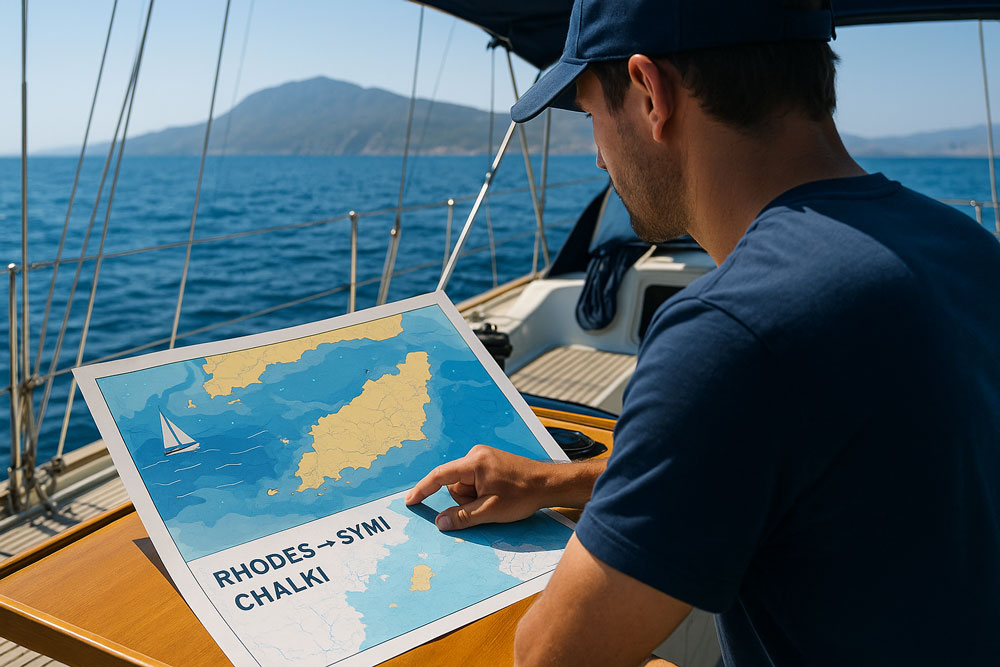
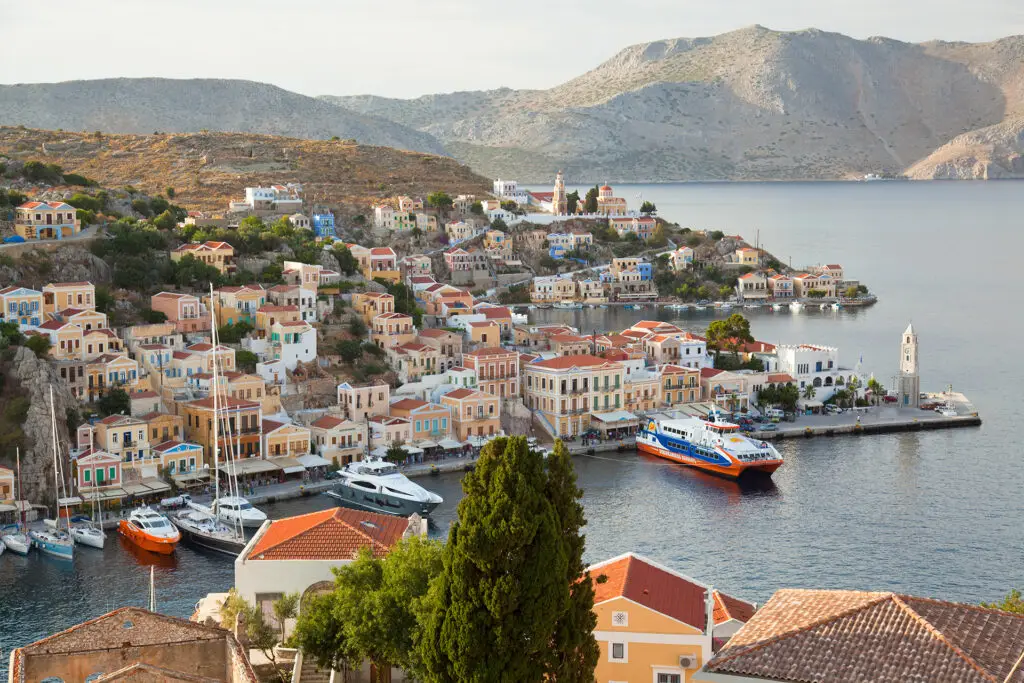
- Symi and Chalki for short hops
- Kos and Kalymnos for central Dodecanese loops
- Karpathos for longer offshore passages
It’s the island that connects everything.
Practical Sailing Tips for Rhodes
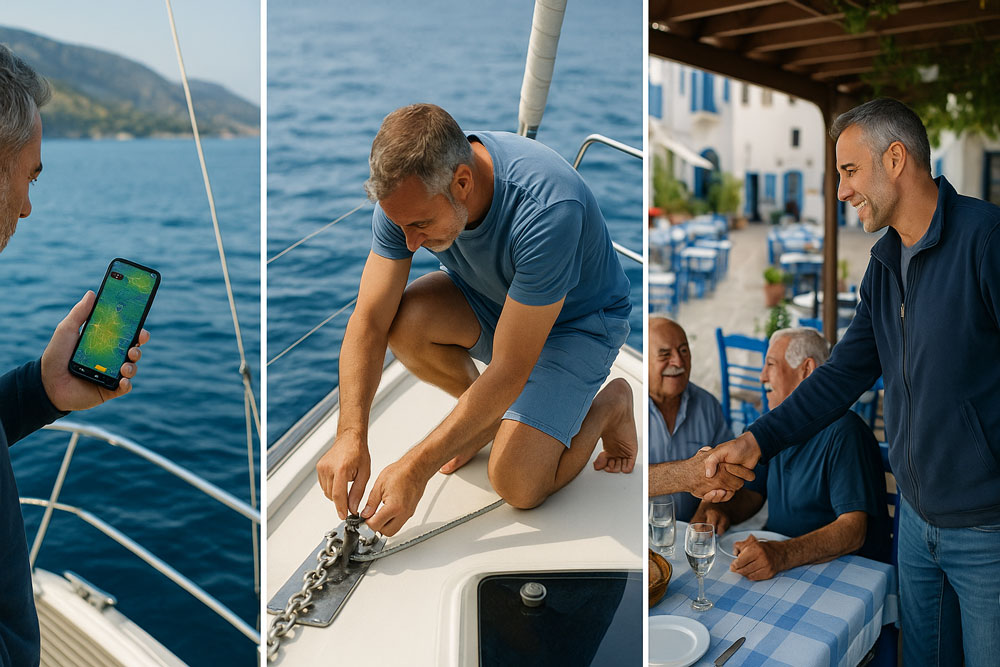
- Anchor early in peak season, bays fill up fast
- East coast is your friend in strong northerlies
- Stock up here before heading to smaller islands
- Use Rhodes for crew changes and maintenance
Treat Rhodes as your operational hub, not just a sightseeing stop.
Why the Largest Island Often Feels the Most Relaxed
There’s a sailing paradox worth noting: bigger islands often feel calmer.
Why?
- More space means less crowding
- More options reduce pressure
- Better infrastructure lowers stress
On Rhodes, you’re not forced into a single harbor or bay. You choose. That freedom changes how the whole trip feels.
Final Thoughts: Rhodes Earns Its Title
Rhodes isn’t just the largest of the Dodecanese islands by size. It’s the largest in possibility.
For skippers, it offers:
- Safety without boredom
- Infrastructure without losing character
- Variety without complexity
If the Dodecanese were a book, Rhodes wouldn’t be a chapter. It would be the spine holding everything together.
And that’s exactly why, sooner or later, most sailing routes here pass through it.
Frequently Asked Questions
1. What is the largest island in the Dodecanese?
Rhodes is the largest island in the Dodecanese, both in land area and coastline length, making it the most dominant island in the region for sailing and infrastructure.
2. Why is Rhodes important for sailors in the Dodecanese?
Rhodes offers the best combination of marinas, harbors, provisioning, technical services, and sheltered anchorages, which makes it a natural hub for skippers.
3. Is Rhodes a good base for long sailing trips?
Yes. Many sailors use Rhodes as a starting or ending base for Dodecanese routes because it has reliable transport, crew change options, fuel, and repair facilities.
4. Which side of Rhodes is best for anchoring?
The east coast of Rhodes is generally better for anchoring, especially during strong northerly winds, as it offers calmer seas and more protected bays.
5. How does Rhodes compare to Kos or Kalymnos for sailing?
Rhodes is significantly larger and more diverse. Kos is easier and more compact, while Kalymnos is smaller and more exposed. Rhodes provides more flexibility in changing conditions.
6. Are there modern marinas on Rhodes?
Yes. Rhodes Marina is a modern facility with water, electricity, fuel, security, and repair services, suitable for both short and long stays.
7. Is Rhodes suitable for less experienced skippers?
Yes, especially along the east coast. The island offers predictable conditions, good charts, and multiple safe harbors, making it manageable for intermediate crews.
8. Can Rhodes be crowded during peak season?
Popular harbors can get busy in July and August, but the island’s size allows sailors to find quieter anchorages if they move away from main ports.
9. How is provisioning on Rhodes compared to smaller islands?
Provisioning on Rhodes is excellent. Large supermarkets, marine suppliers, and fuel stations are readily available near sailing areas.
10. Is Rhodes a good stop before sailing to Turkey?
Yes. Rhodes is often used as a final stop before crossing to Turkey due to its proximity, customs facilities, and strong nautical infrastructure.